
Composite vs Wood Decking in Windsor–Essex (And the ROI Most Homeowners Overlook)
If you’re planning a new deck in Windsor, Tecumseh, LaSalle, Lakeshore, or Belle River,
the biggest decision usually comes down to one question:
composite or wood?
Both can be good options — but they behave very differently in our local climate.
Below is a real-world breakdown based on what actually holds up around here,
plus how to think about return on investment (ROI), not just upfront cost.
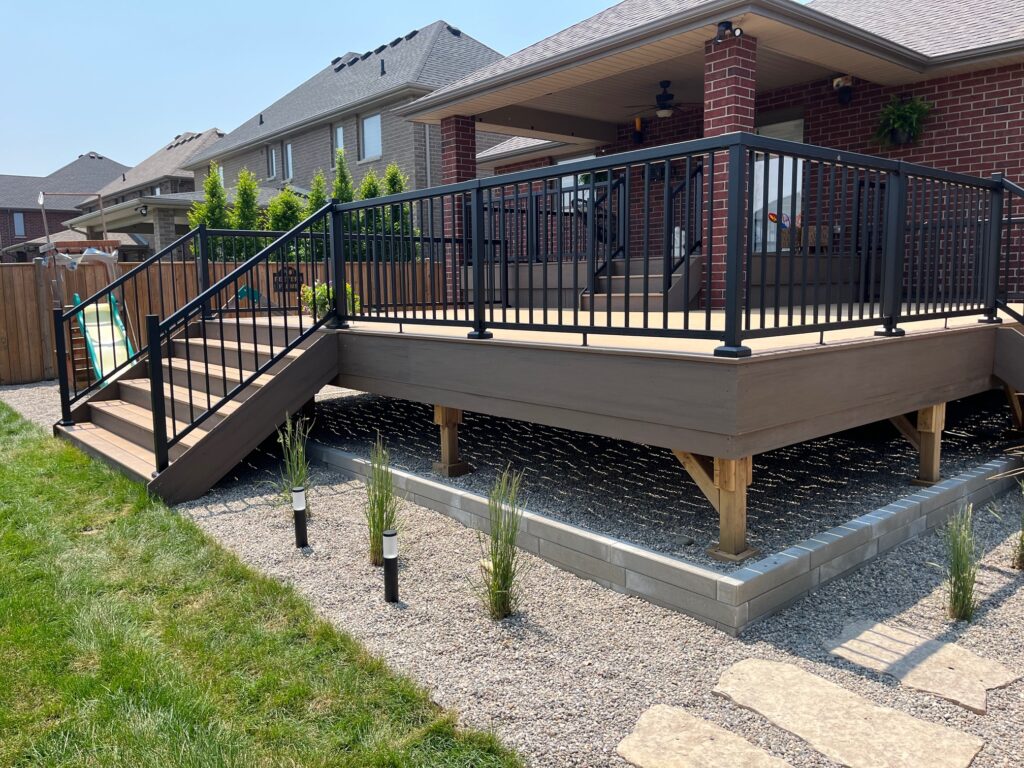
Why Windsor–Essex Weather Matters So Much
Decks around here deal with a lot:
humid summers, wet springs and falls, and constant freeze–thaw cycles in winter.
That combination is tough on materials, especially anything that absorbs moisture.
This is where the gap between wood and composite really shows up.
If maintenance slips even a bit, wood tends to age fast in our area.
Composite is built to handle these conditions with far less intervention.
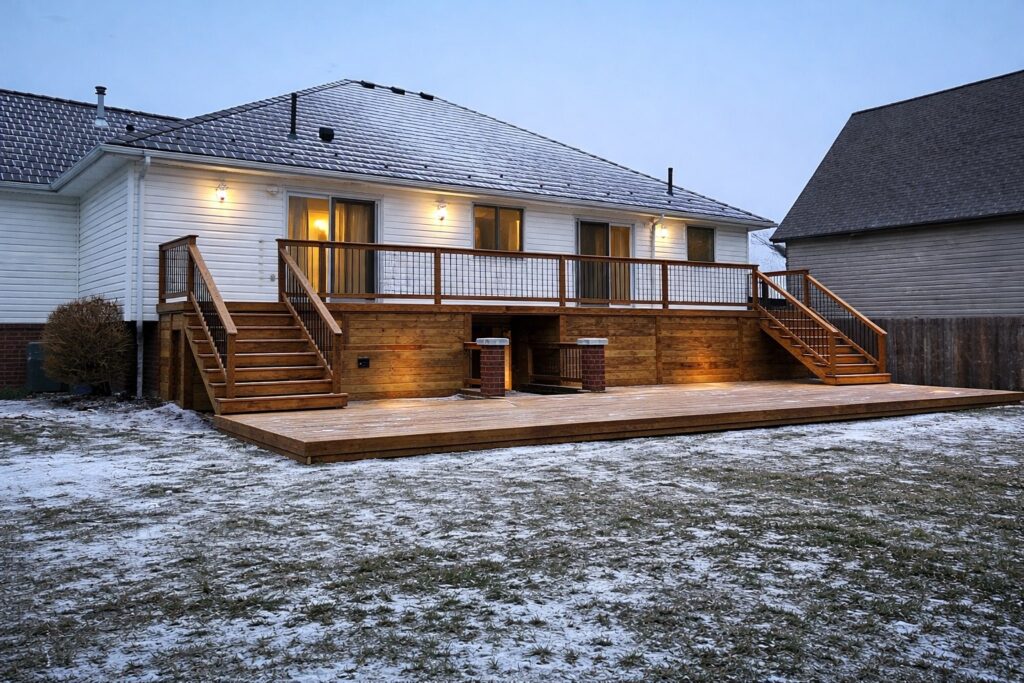
Wood Decking: Lower Upfront Cost, Higher Ongoing Commitment
Wood decking is still popular in Windsor–Essex because the upfront price is usually lower
and it has a natural, traditional look.
- Pros: lower initial cost, easy to modify or repair, natural appearance
- Cons: regular staining/sealing, cracking and splintering over time, uneven fading, moisture sensitivity
In our climate, most wood decks need ongoing maintenance every 1–2 years.
Skip that, and the deck usually starts to look tired much sooner than homeowners expect.
Composite Decking: Higher Upfront, Much Lower Maintenance
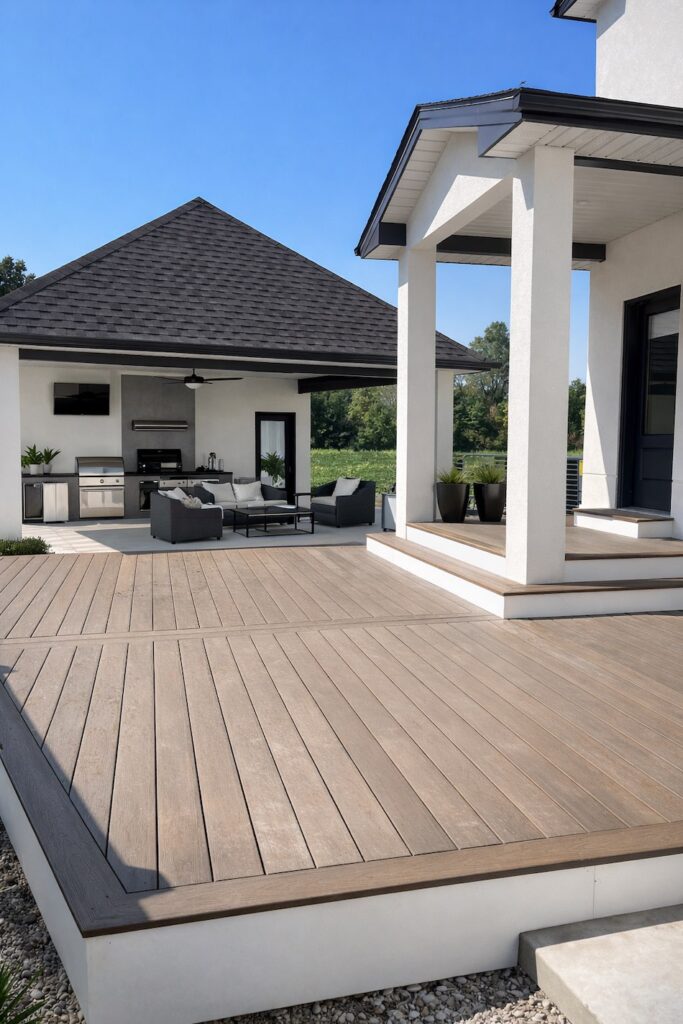
Composite decking costs more upfront, but it’s designed to solve most of the issues
that cause wood decks to struggle in Windsor–Essex.
We typically build composite decks using TimberTech and Deckorators
because they hold colour well, resist moisture, and stay stable through temperature swings.
- Pros: no staining or sealing, no splinters, strong moisture resistance, consistent appearance
- Cons: higher initial cost, can feel warmer in direct summer sun
Composite vs Wood: Quick Comparison
| Feature | Wood | Composite |
|---|---|---|
| Upfront cost | Lower | Higher |
| Maintenance | High | Very low |
| Splinters / cracking | Common over time | None |
| Long-term appearance | Depends on upkeep | Consistent |
ROI: Why Composite Often Makes More Sense Long-Term
ROI isn’t just about resale — it’s also about time, hassle, and future costs.
Around Windsor–Essex, composite often wins on ROI because:
- You’re not paying for stain, sealers, or repeated labour
- You’re not replacing cracked or splintered boards
- The deck keeps looking newer for longer
- Buyers strongly prefer low-maintenance outdoor spaces
Wood
Composite
Lower maintenance
Ongoing maintenance
Composite usually costs more on day one, but over 10–15 years,
it often ends up being the more economical and stress-free option.
So… Which Should You Choose?
- Choose wood if upfront budget is the main driver and you’re okay with regular maintenance.
- Choose composite if you want a deck that stays looking good with minimal effort.
- Think ROI if resale or long-term ownership matters — composite usually wins here.
If you’re comparing options locally, our
composite decking page
goes deeper into materials and layout ideas, and if you want numbers,
you can request a quick comparison through our
deck quote page.